Redundant CAN-Based Robot Controller.
High-speed STM32-based joystick and button controller with CAN FD, built for intense, high-stakes matches.
The build
Controlling a robot is harder than people think. It needs to be fast, it needs to be accurate, it needs to be redundant and reliable. And in high-speed, high-intensity matches, having all of those things is really, really important.
When our previous setup kept breaking and started losing us matches, I designed a custom STM32-based joystick and button controller that communicates over CAN FD. It has redundant USB connections that feed into two separate CAN channels for failover protection. Each board supports up to 20 buttons and 4 joysticks, with extremely fast data transfer and virtually zero latency.
I also built a custom buck-boost power supply to dummy-proof the whole thing, protecting it from voltage issues and user errors. On top of that, the boards can talk to each other seamlessly, which gives us extra flexibility and redundancy in how the driver station is set up. It's still in development — software's in progress, hardware's being debugged — but it's already insanely responsive and ridiculously powerful.
Evidence
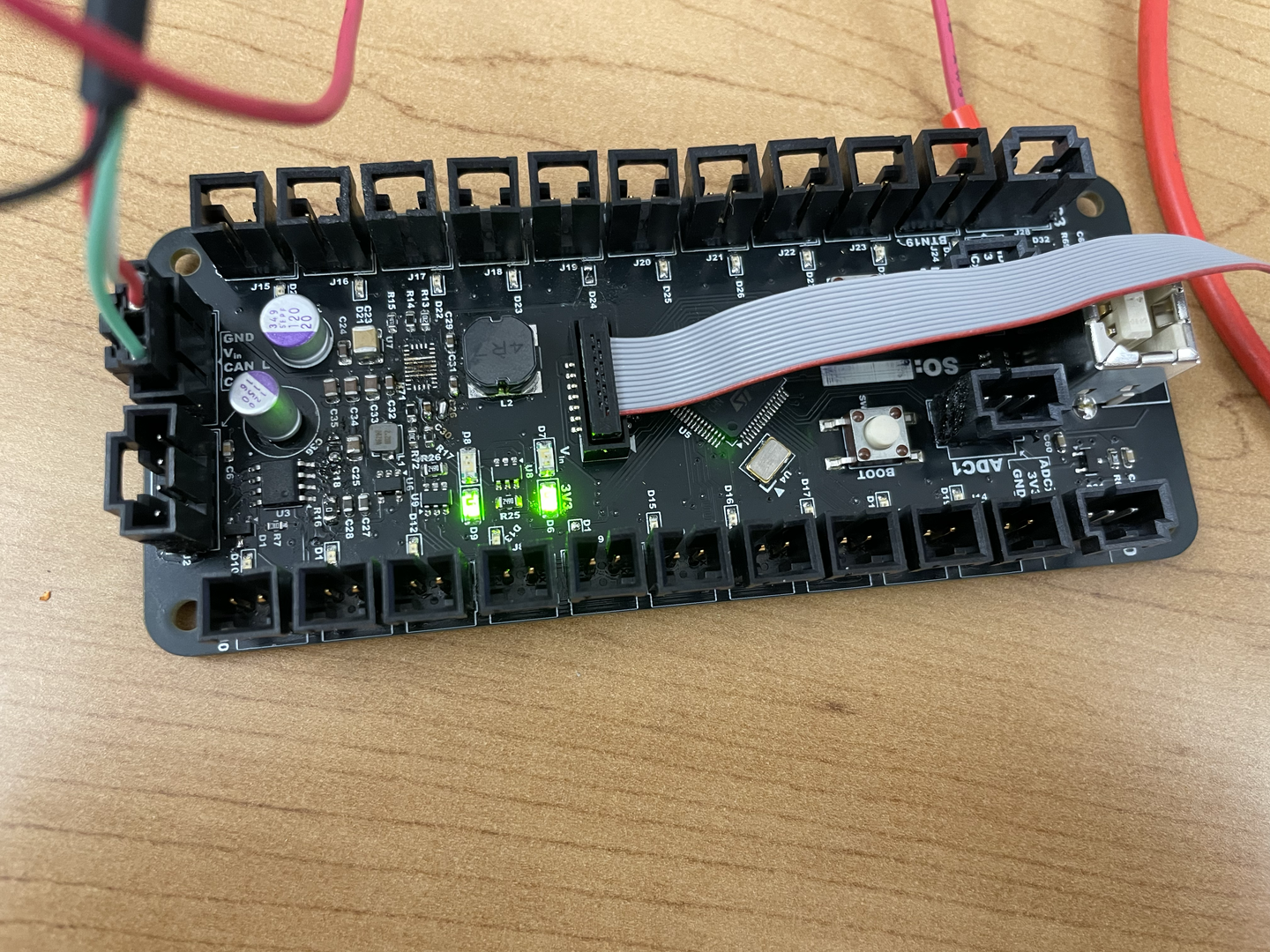
The fully assembled controller board with power connected and software successfully flashed, showing all status LEDs lit up and ready for operation.
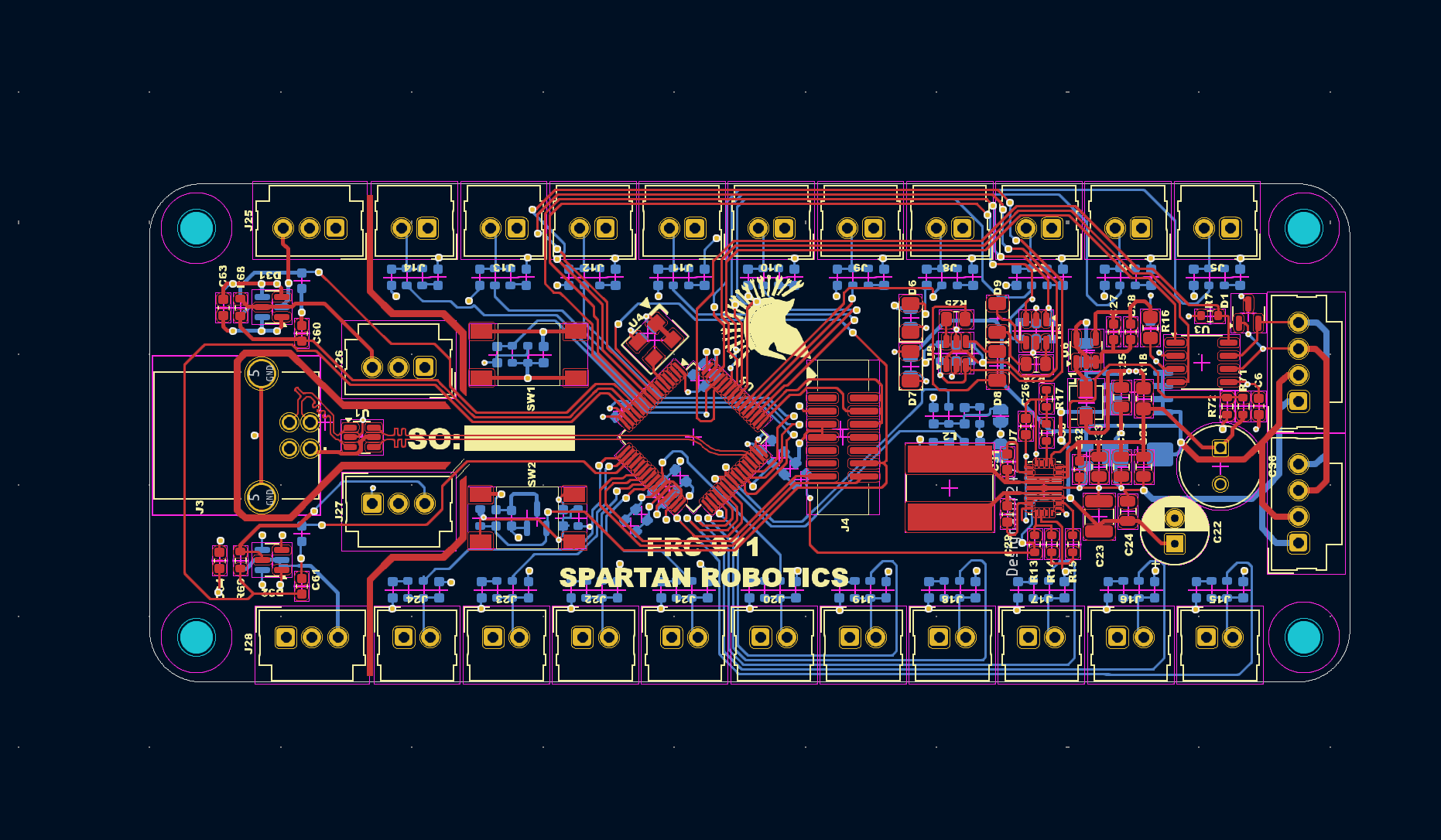
PCB layout design of the button controller board showing the careful routing of high-speed signals and power distribution.
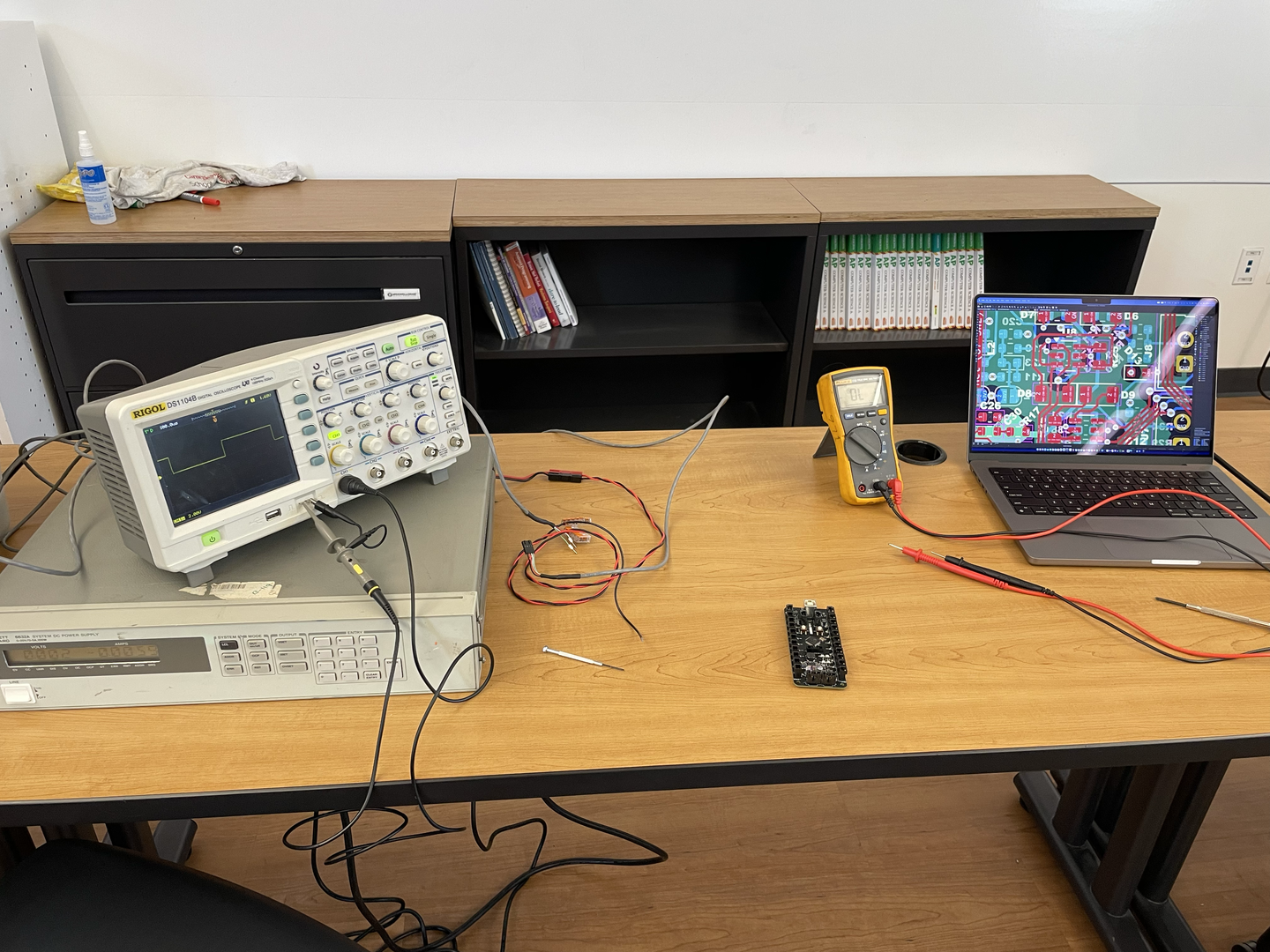
Hardware debugging session with logic analyzer and test equipment connected to verify signal integrity and timing.
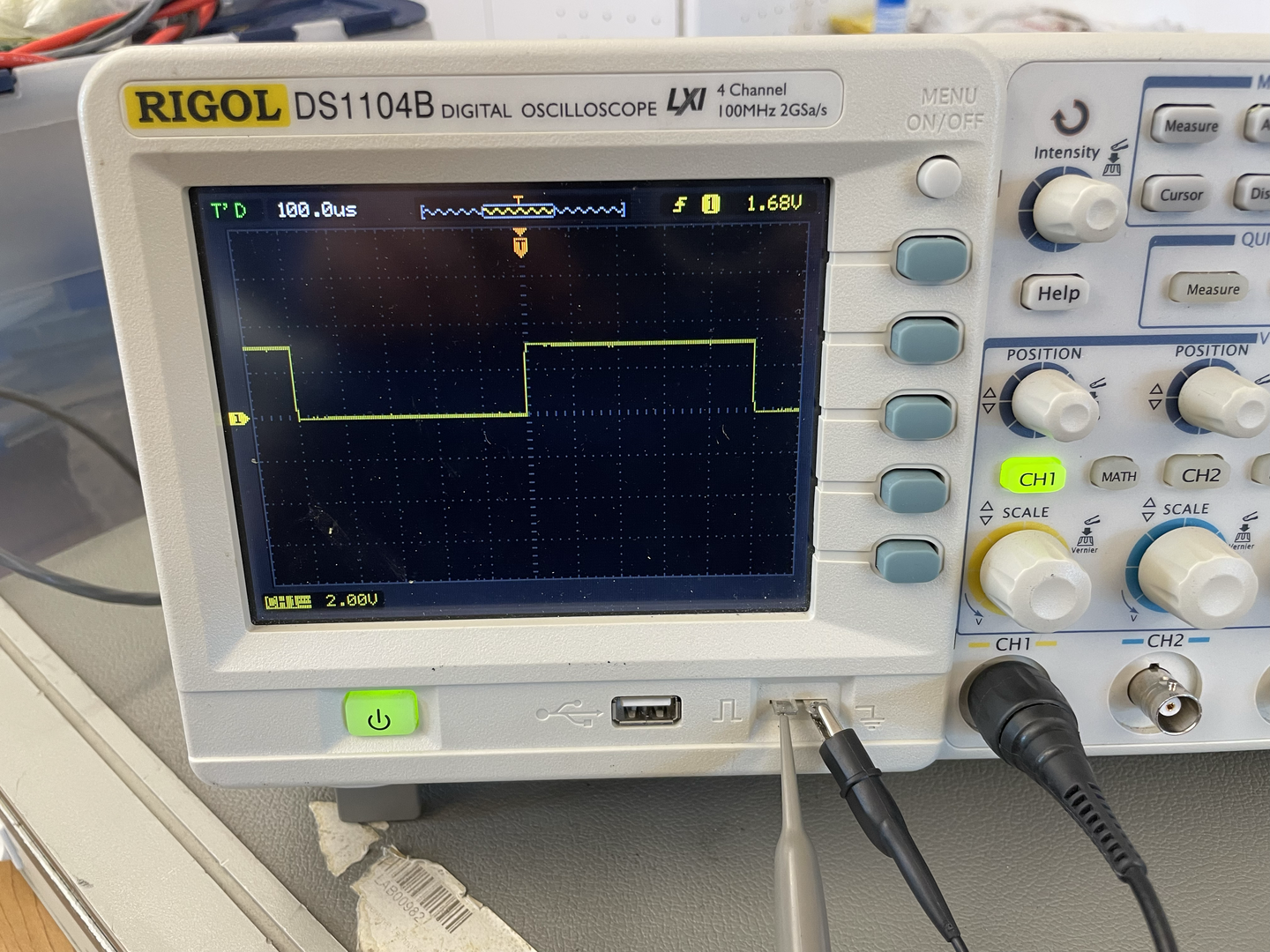
Oscilloscope measurement of signal waveforms to ensure clean communication and proper voltage levels across the system.
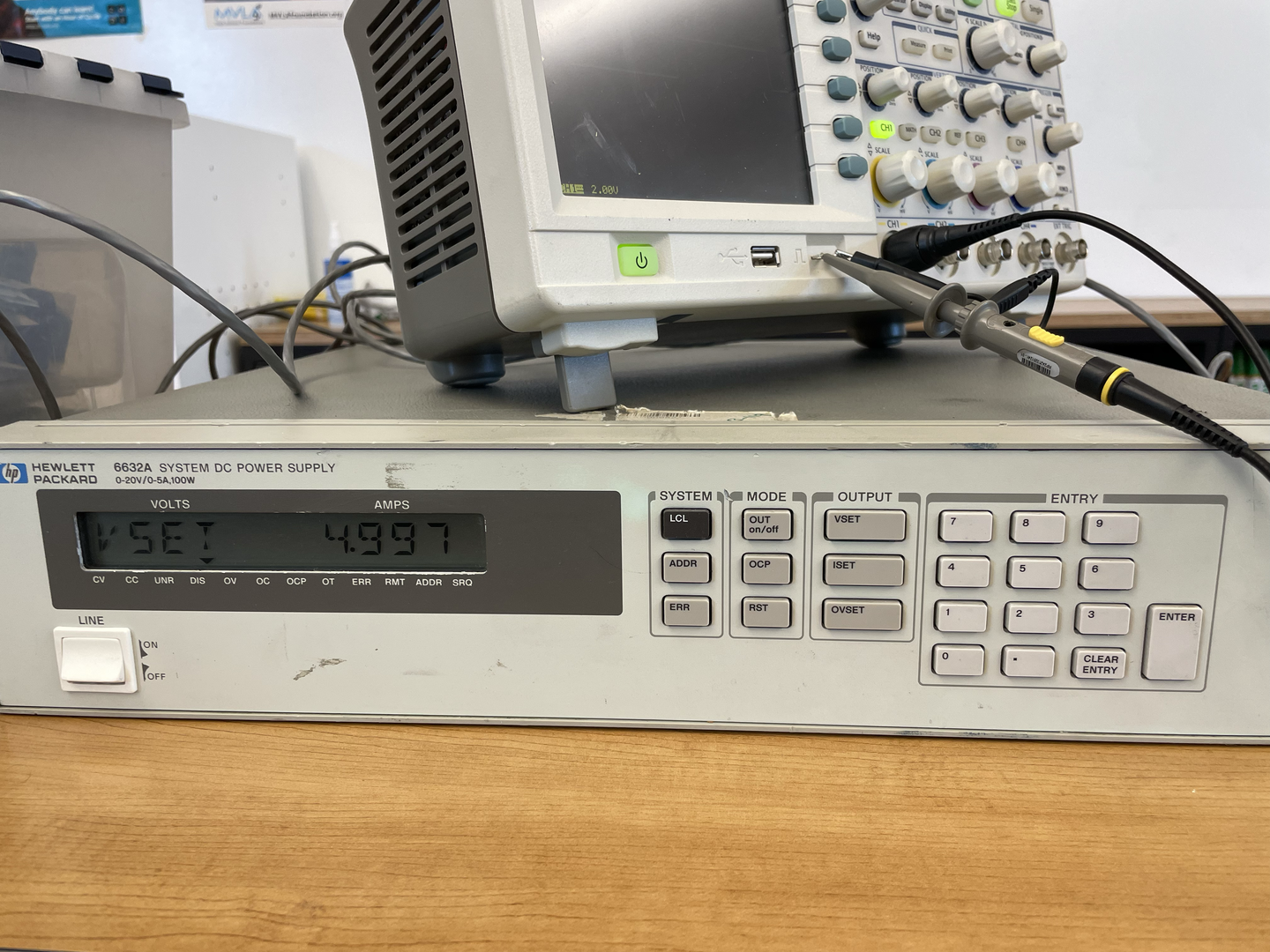
Custom buck-boost power supply providing stable 5V to the controller board, with protection against voltage fluctuations.
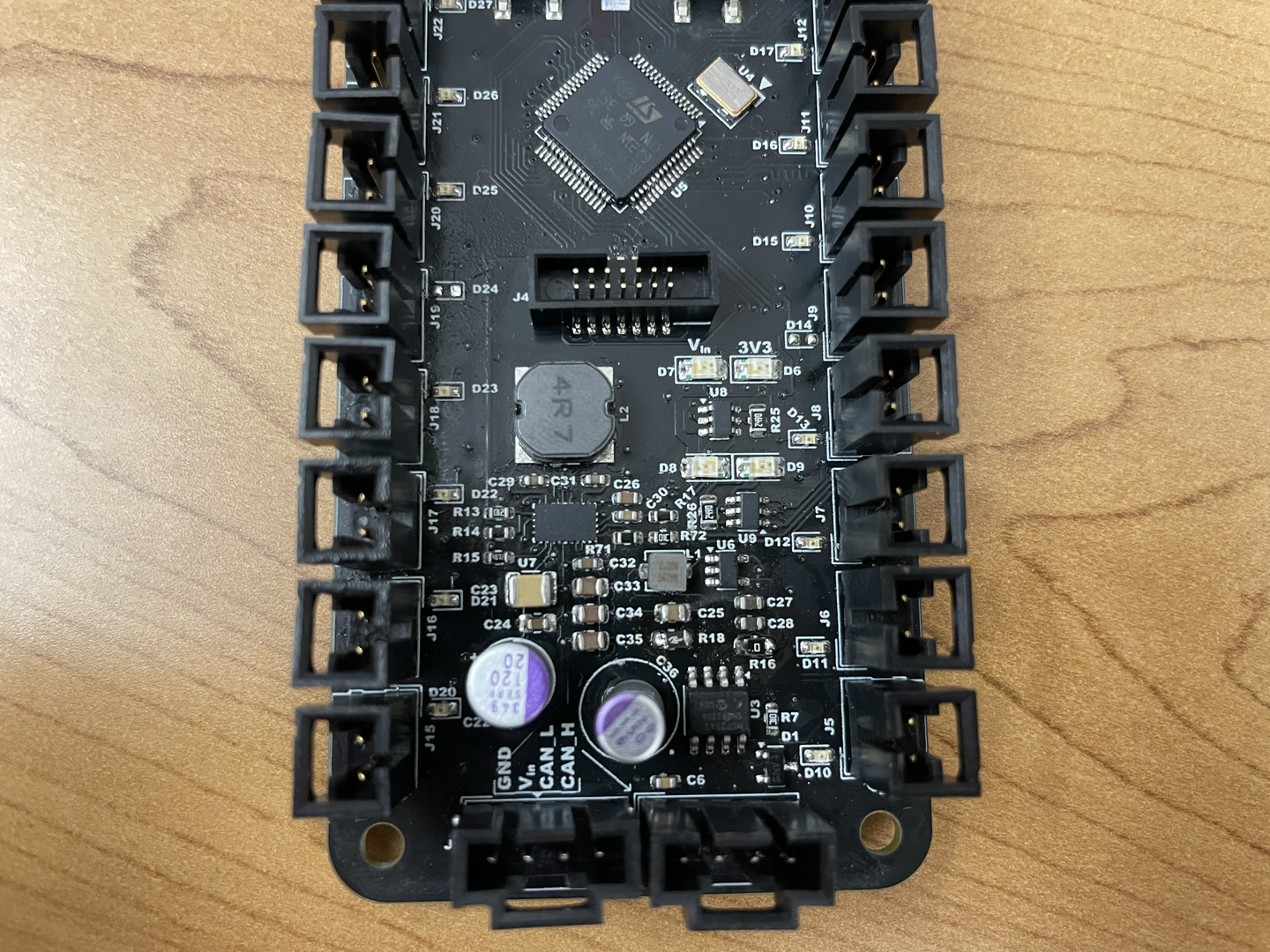
Another view of the power supply module showing the compact design and robust connectors for reliable operation.
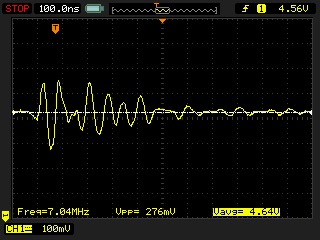
Measurement of power supply noise after linear regulation through the TI chip, showing extremely clean power delivery essential for reliable operation.