Somo AI Smart Hospitality Platform.
Lead prototyping engineer for AI-driven smart hotel automation system. Built 12 custom PCBs validating distinct product lines, contributing to $20M+ funding.
The build
At Somo AI, I was in charge of leading prototyping, which basically meant I got to build from napkin to product. That included taking ideas from rough sketches all the way through software, hardware, and enclosures, usually within one to two-week timeframes, to figure out what would actually work in our smart hotel system.
The goal was to create a true smart system that didn't rely on Wi-Fi or crowded 2.4 GHz and 5 GHz channels. Instead, we used an automotive CAN bus, so the system didn't need internet access or cell service, you could literally be in the middle of the ocean and it would still work. Everything talked to each other: lights, climate control, shades, sensors like presence detectors and door sensors, and more. It was a fully integrated, end-to-end system.
One of the coolest parts was that these weren't just experiments that sat on a shelf, they were used in investor demos. Often, the only products investors ever saw were these prototypes, neatly packaged in production quality enclosures. They helped Somo raise over $20 million in funding and generate $1.2 million in revenue.
There were countless tight deadlines where I had to prove whether an idea was viable, which forced me to get really good at building proof-of-concepts that worked on the first try, and when they didn't, I got equally good at cutting traces and patching boards to make them work fast.
I worked with a ridiculous variety of technologies: real-time operating systems, multiple microcontroller platforms (ESP32, Raspberry Pi Pico, STM32), and every kind of sensor you can imagine, PIR, thermal, current sensing, millimeter-wave radar, IMUs, and more. I also worked with motor control systems, industrial protocols like RS-485 for DMX lighting over CAN bus, and RF communications ranging from sub-GHz to Bluetooth Low Energy.
The entire system was designed to retrofit into existing hotels without tearing anything apart, while still being smart enough to optimize both energy usage and guest experience.
Evidence
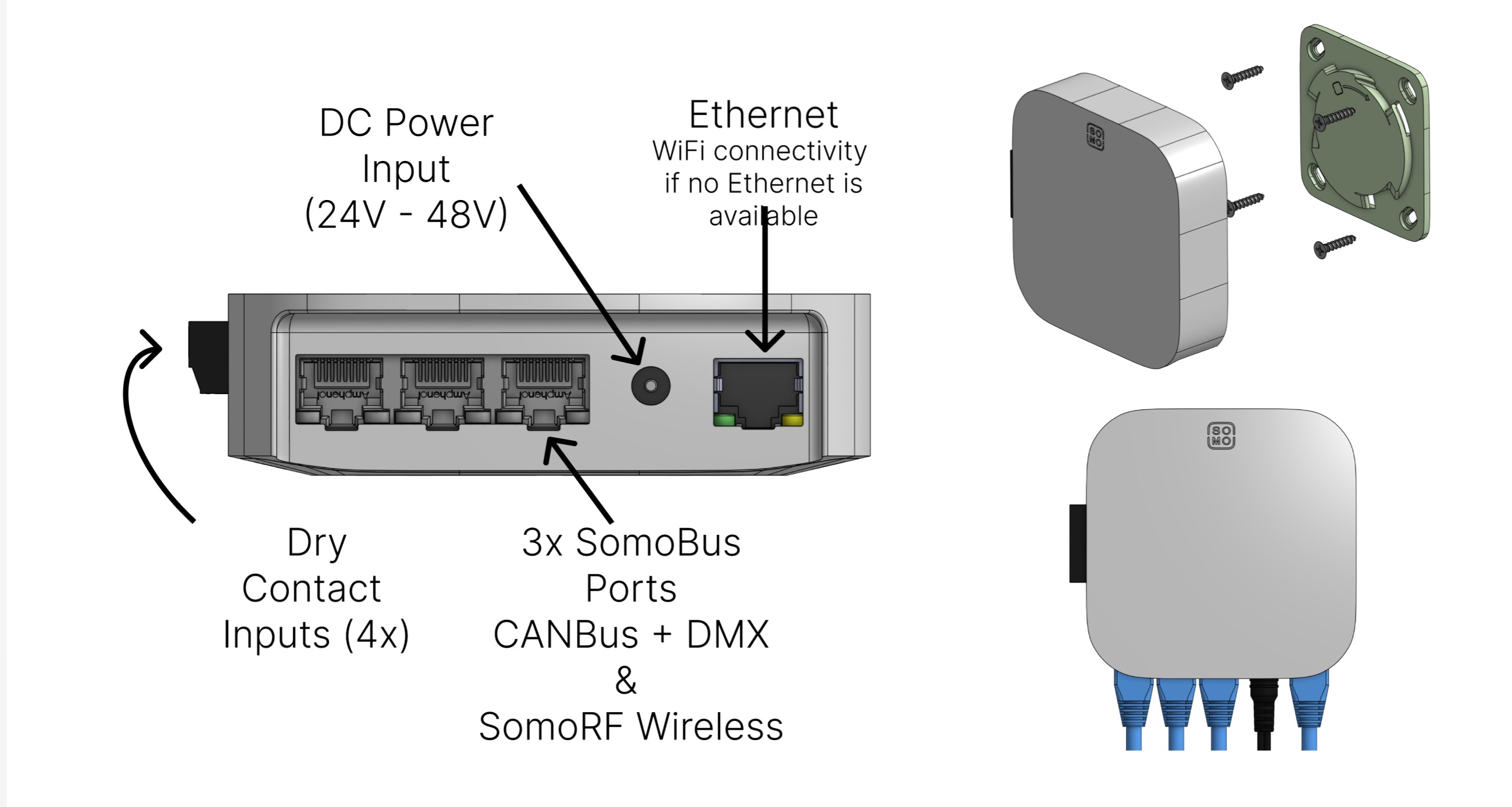
Technical diagram of the base station showing the system architecture and component integration for coordinating all smart room devices.
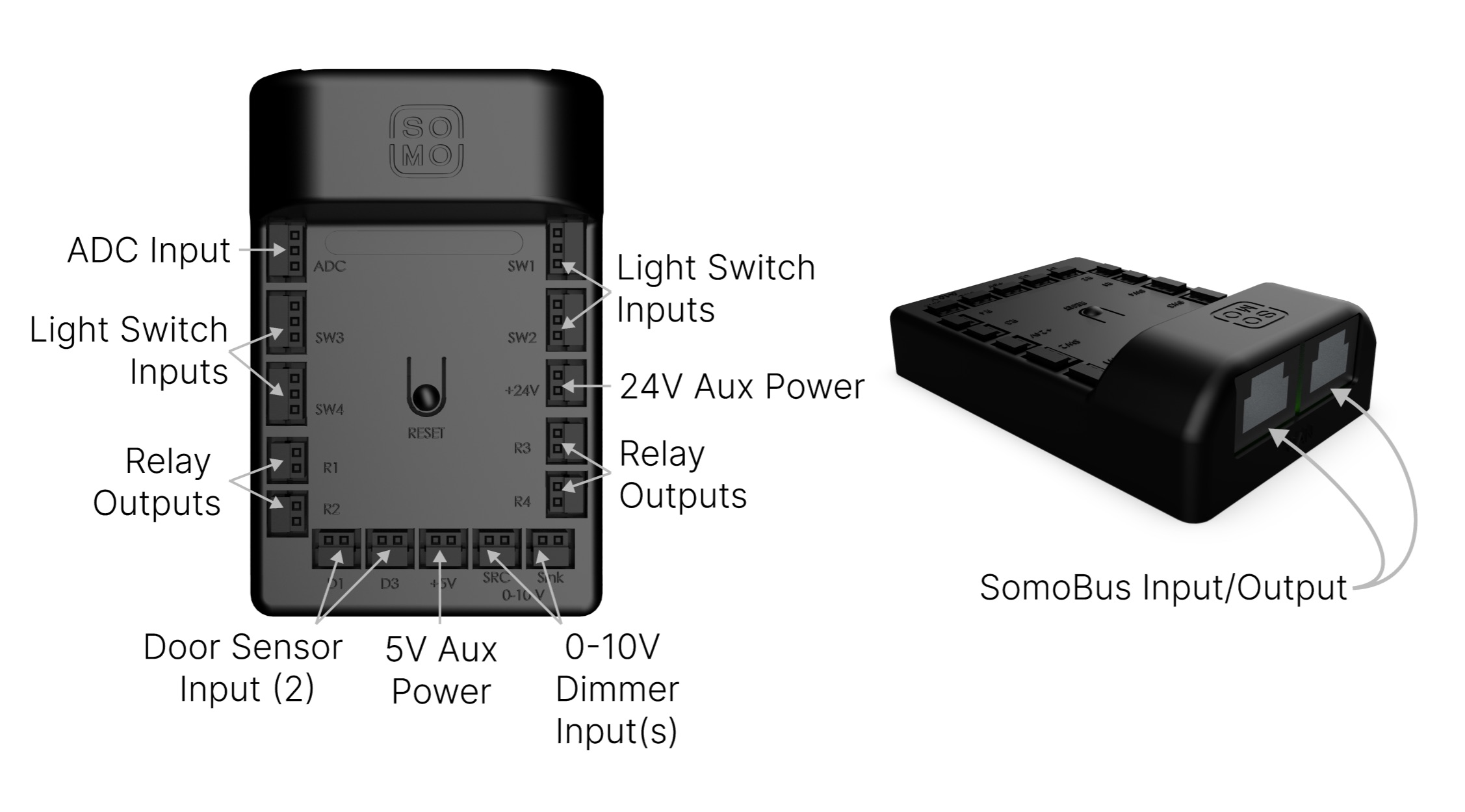
CAN bus communication architecture diagram illustrating the robust networking protocol used throughout the smart hospitality system.
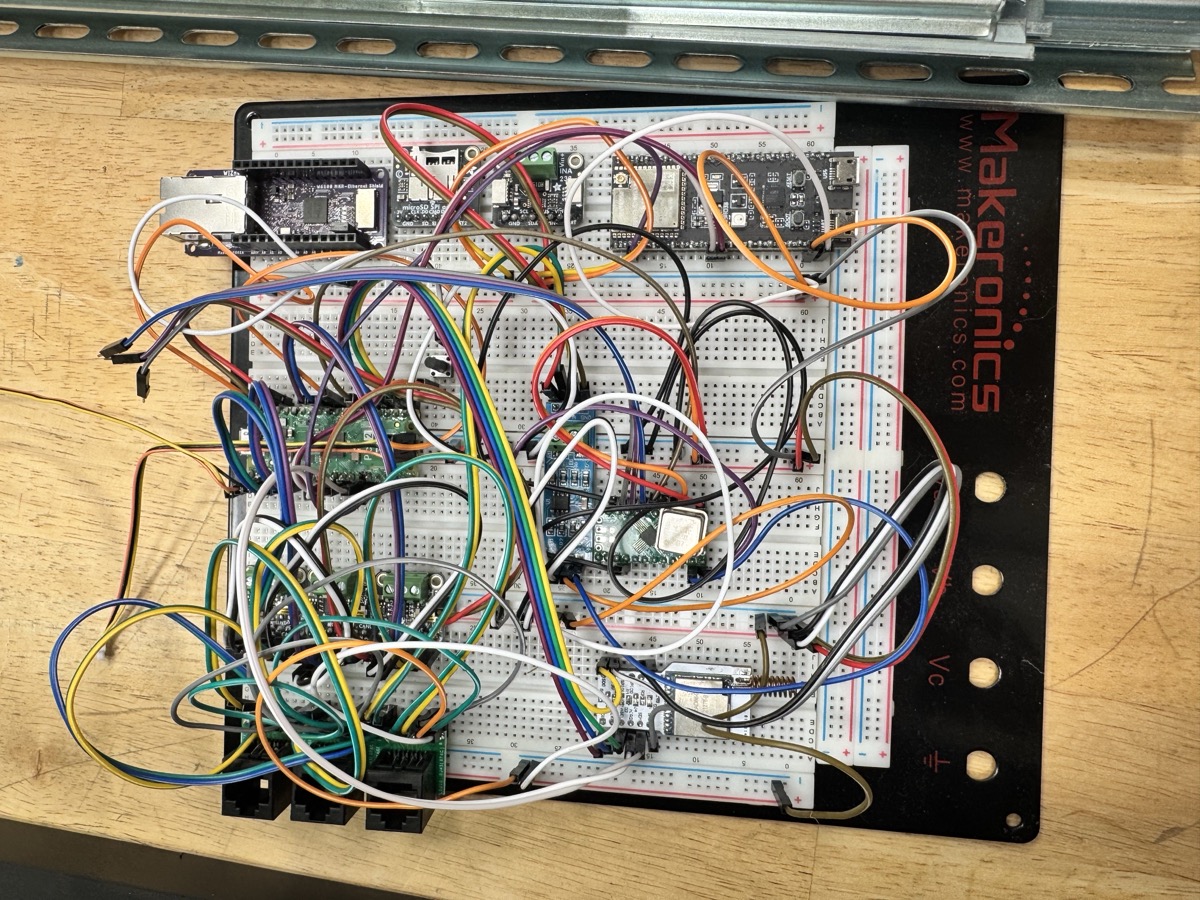
Early breadboard prototype of the base station used for initial circuit validation and firmware development.
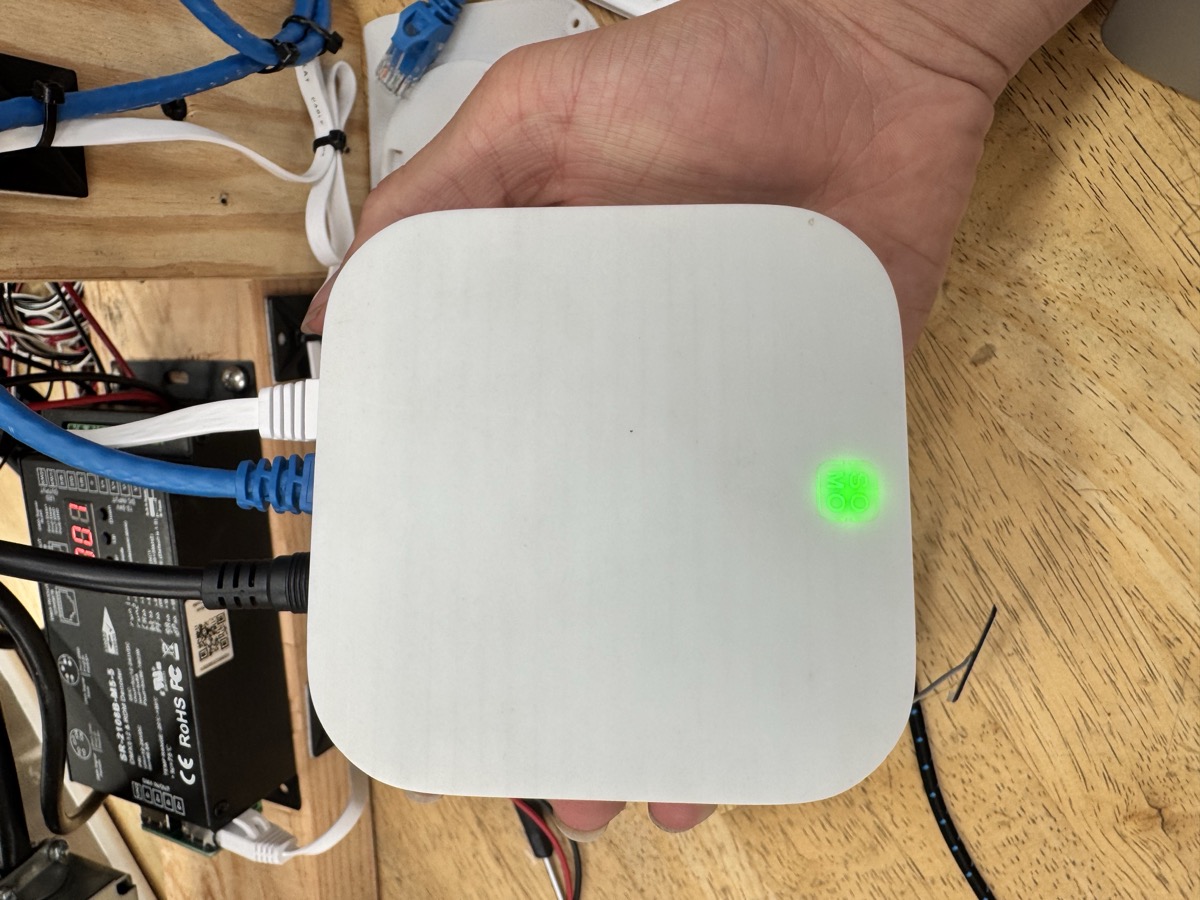
Top view of the base station PCB featuring RF communication modules, microcontroller, and power management circuitry.
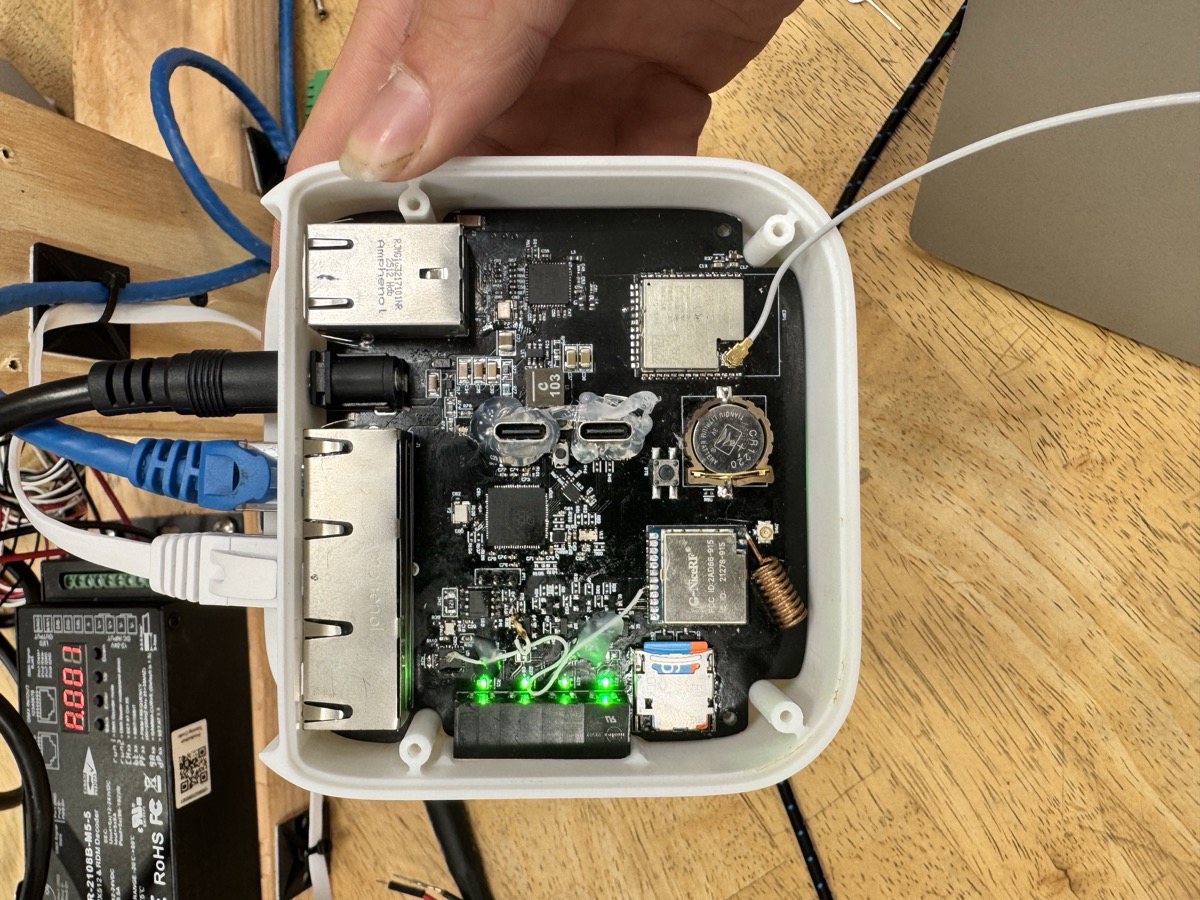
Interior view of the base station showing the complex PCB layout and component arrangement for coordinating all room devices.
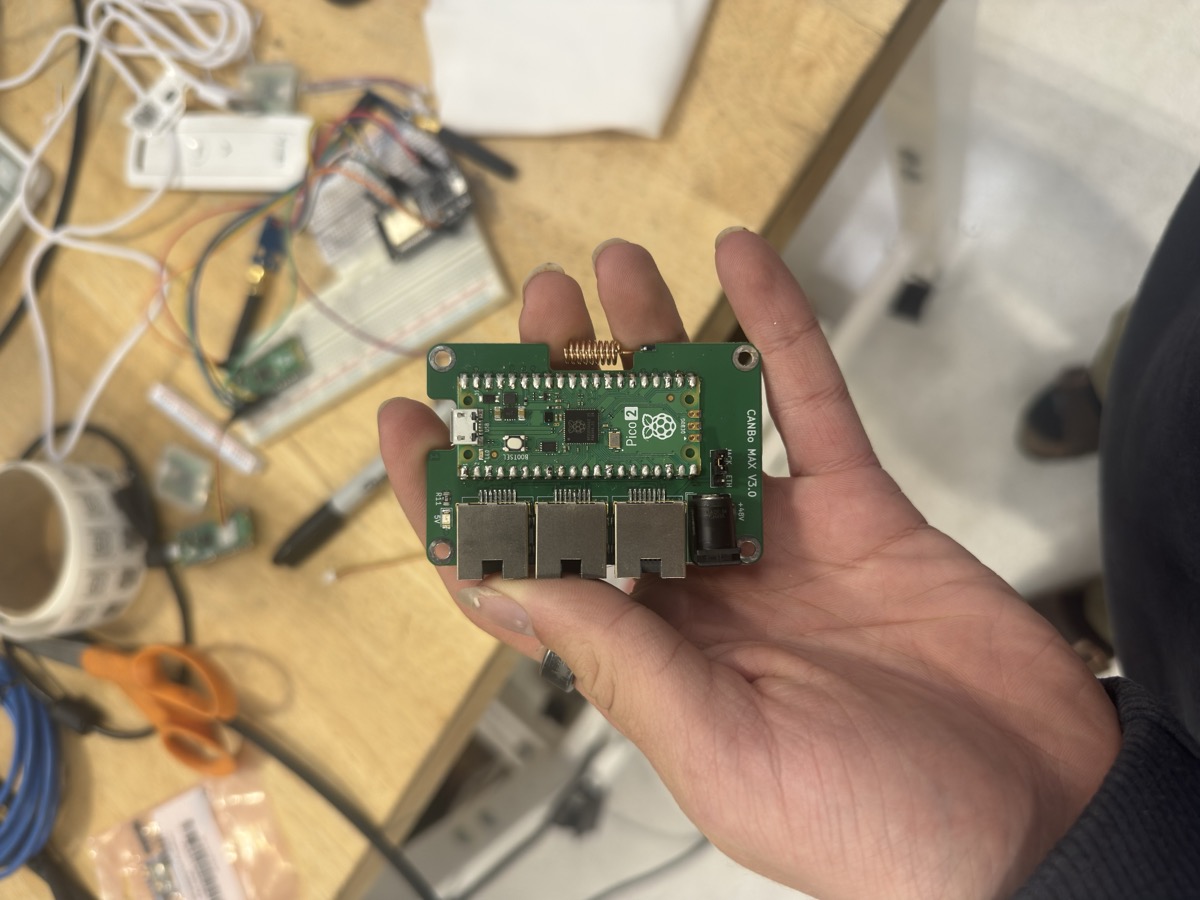
Top view of the travel-friendly developer base station with integrated debugging interfaces and status LEDs.
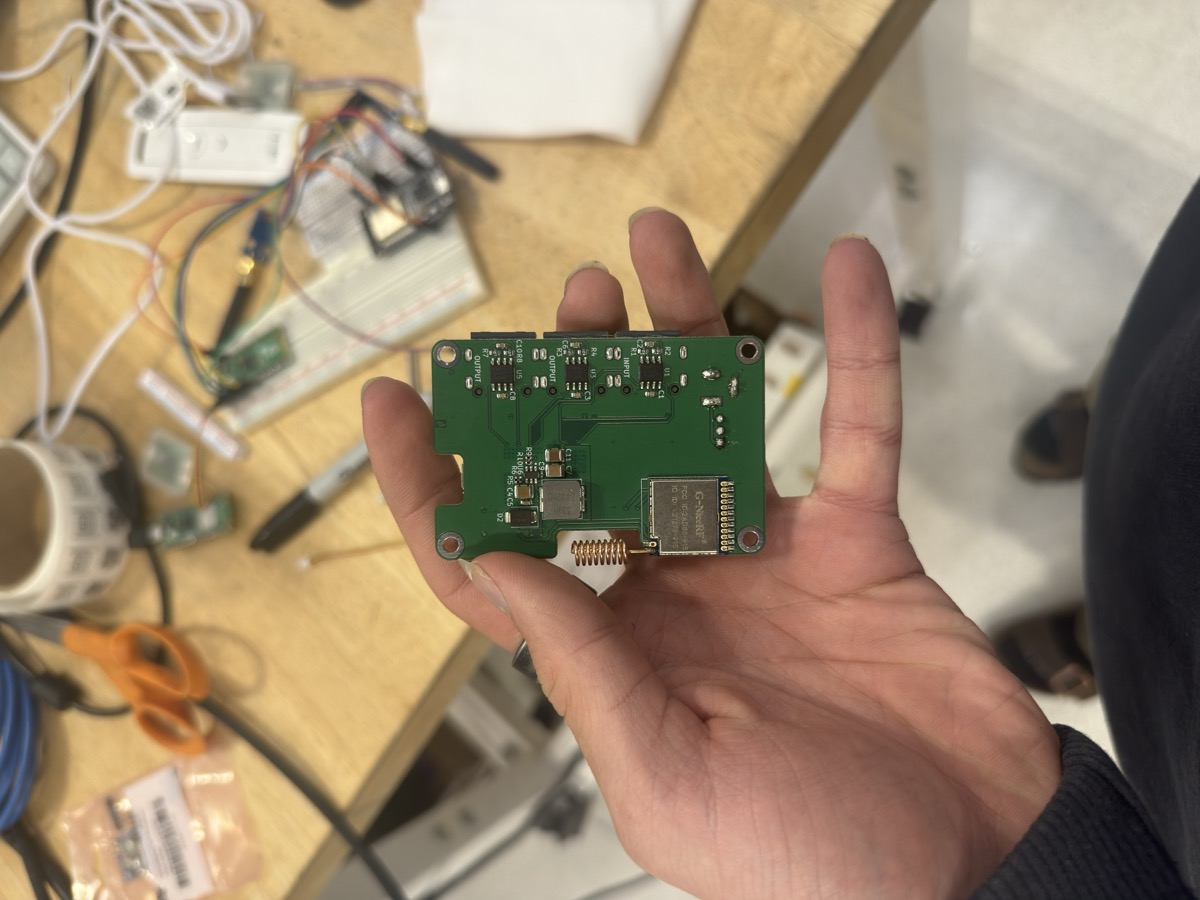
Bottom view of the portable developer base station designed for field testing and demonstrations.

First-generation low-voltage smart switch prototype, establishing the foundation for future iterations.
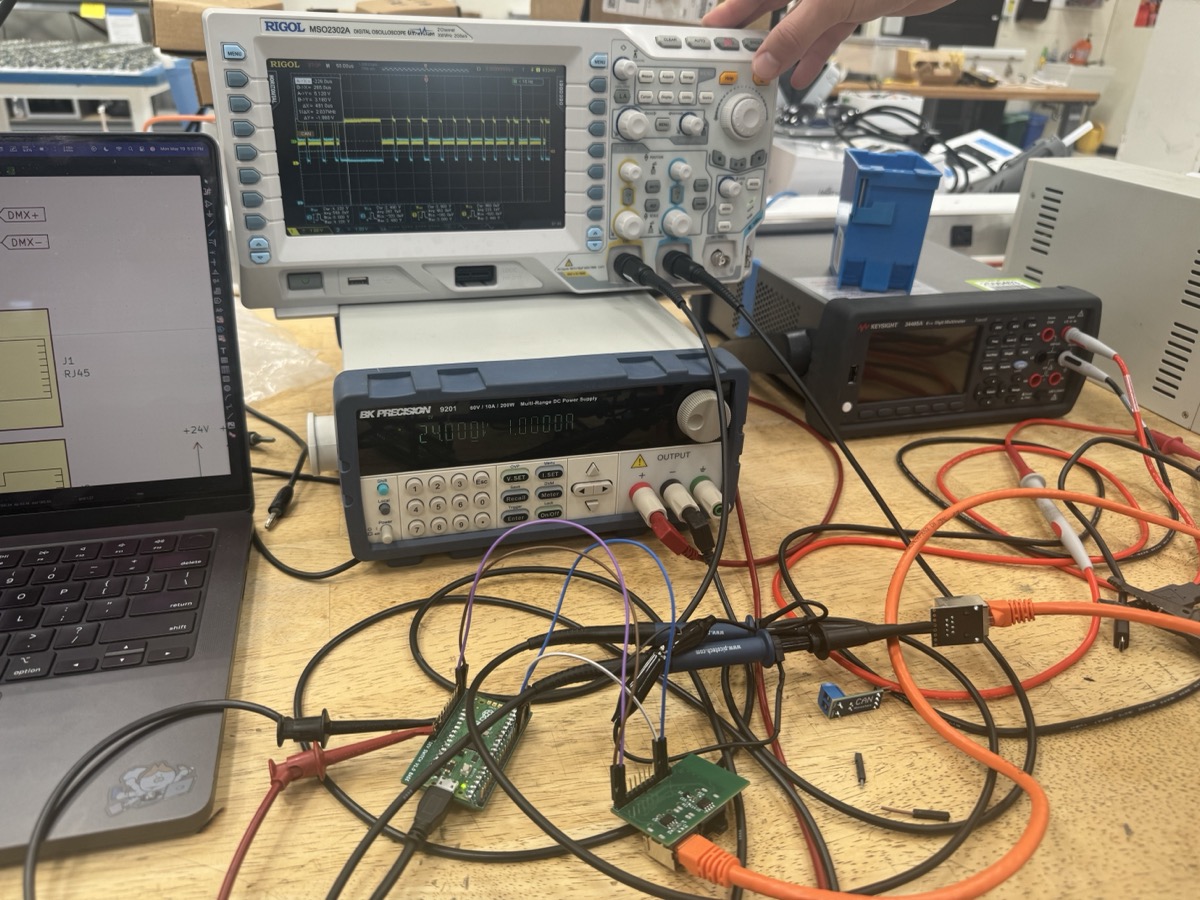
Testing setup during the bringup phase of the full-featured smart switch, validating all sensor inputs and communication protocols.
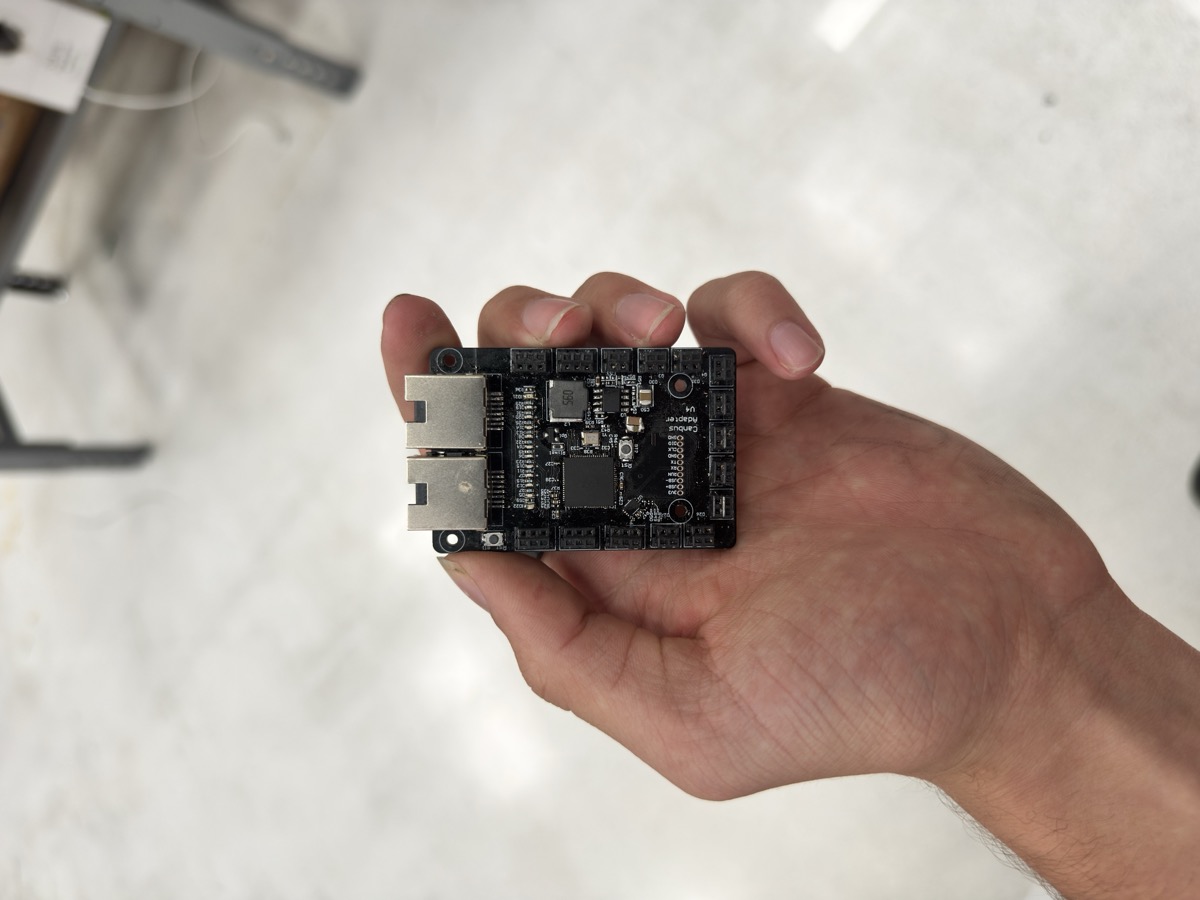
Top side of production version 5 smart switch PCB with integrated sensors, communication modules, and power circuits.
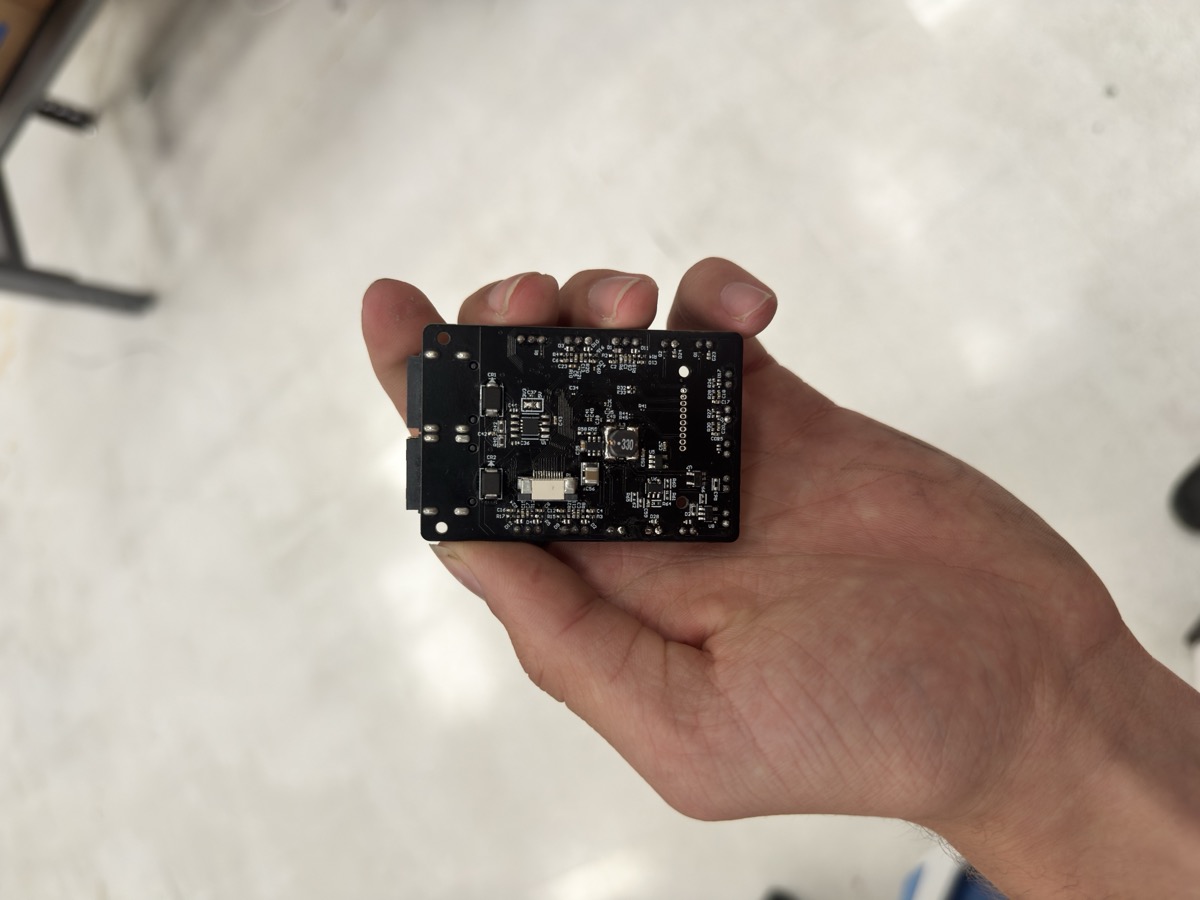
Bottom side of production version 5 smart switch PCB, showcasing optimized routing and component placement.
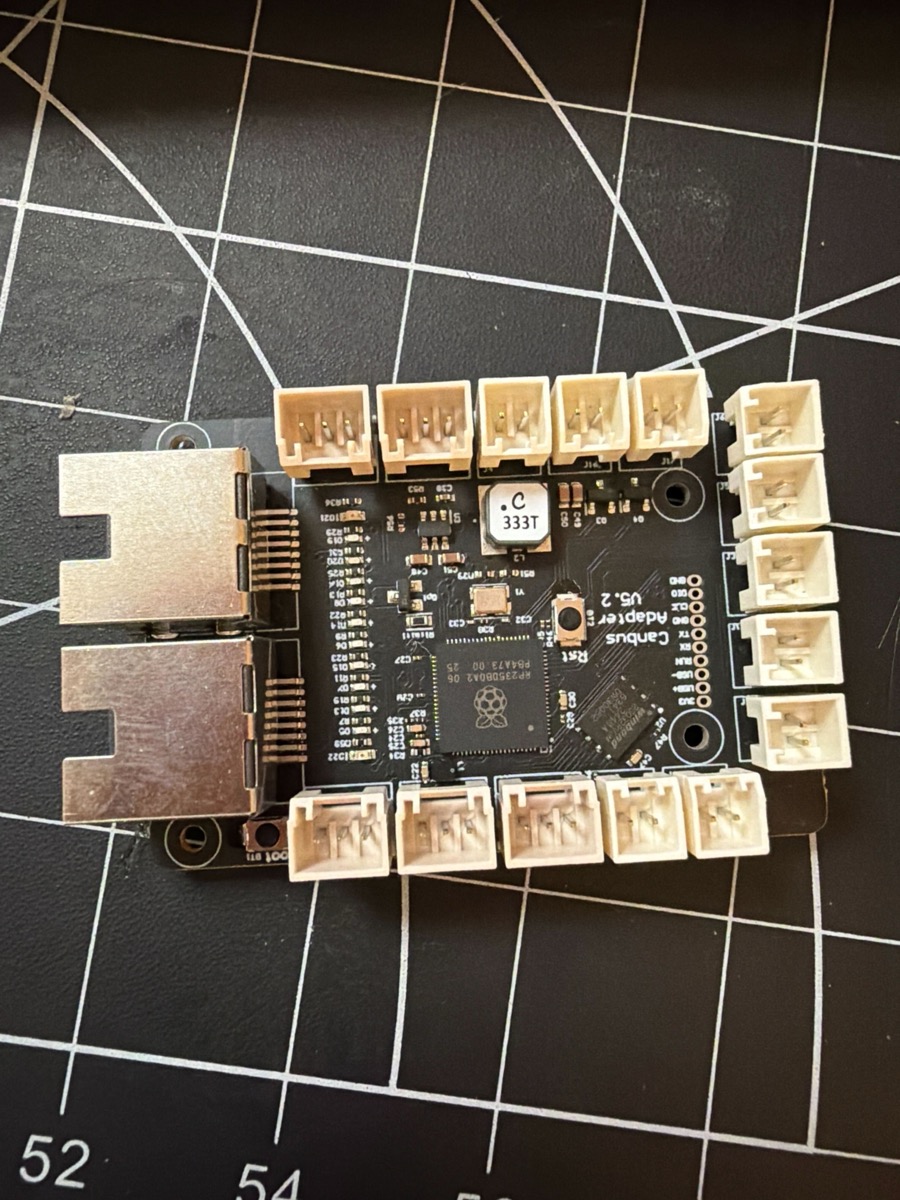
Version 7 of the smart switch - the culmination of iterative design improvements for optimal performance and manufacturability.
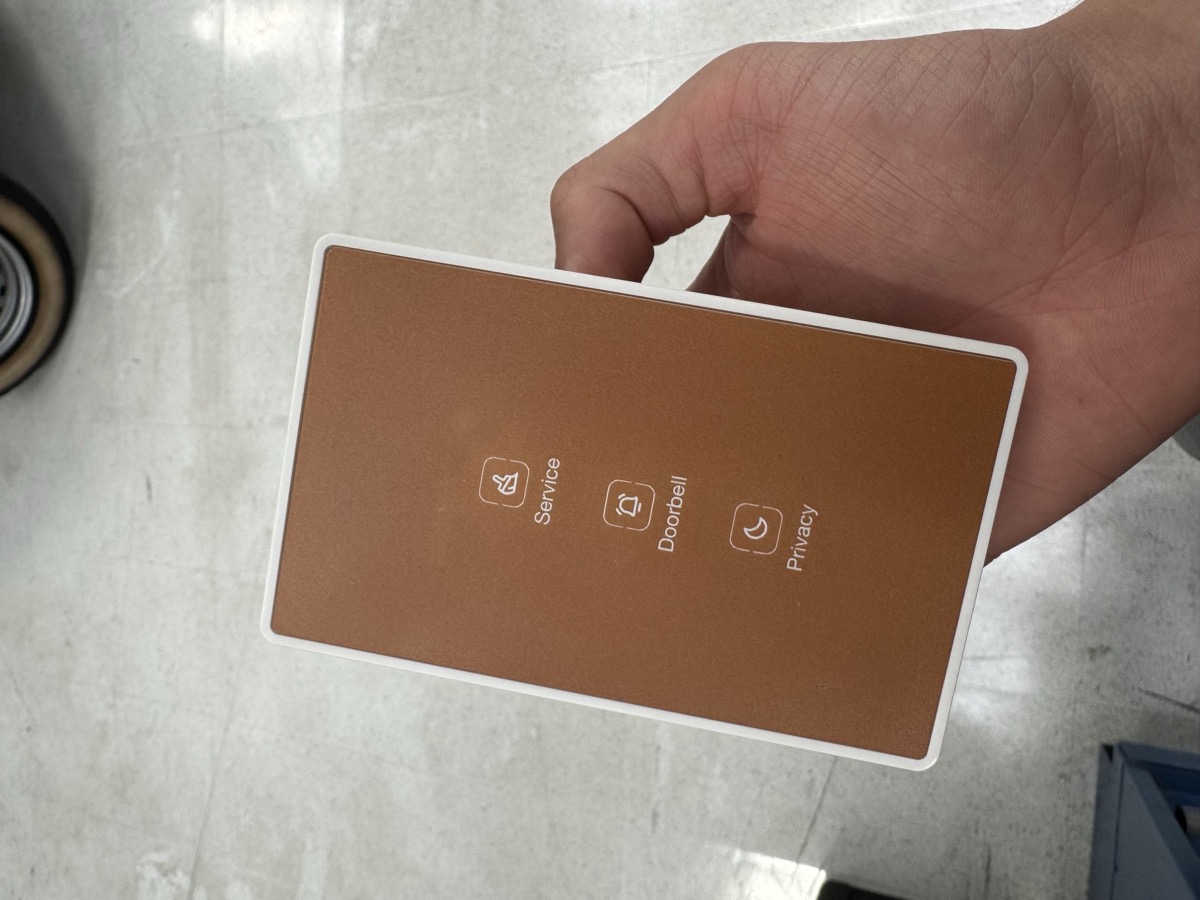
Generic version of the custom capacitive light plate with haptic feedback, featuring touch-sensitive controls and ambient lighting.
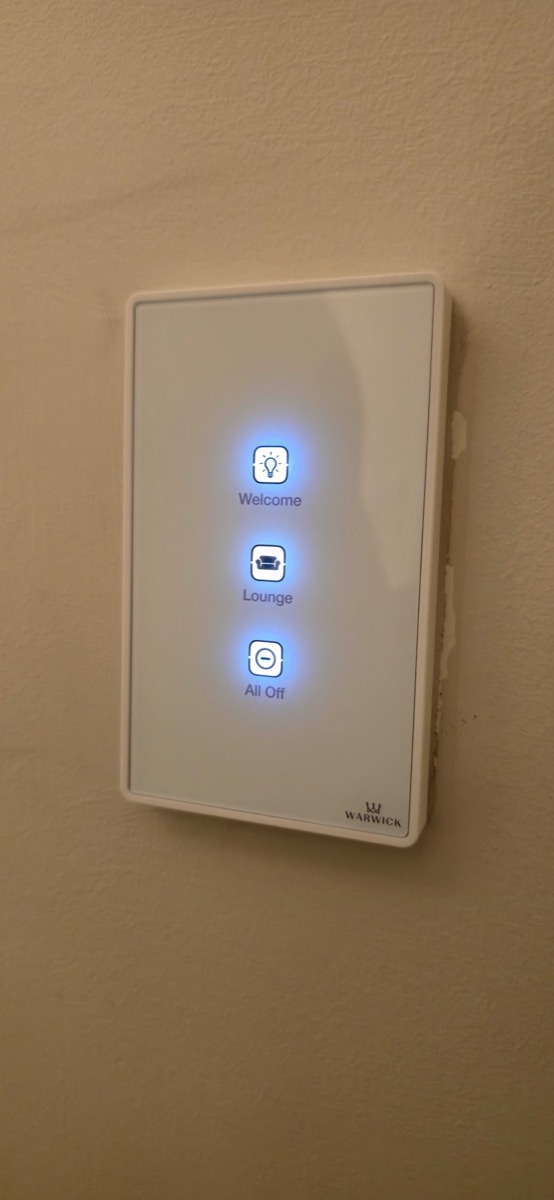
Custom capacitive light plate installed in wall, demonstrating the elegant retrofit design that replaces traditional switches.
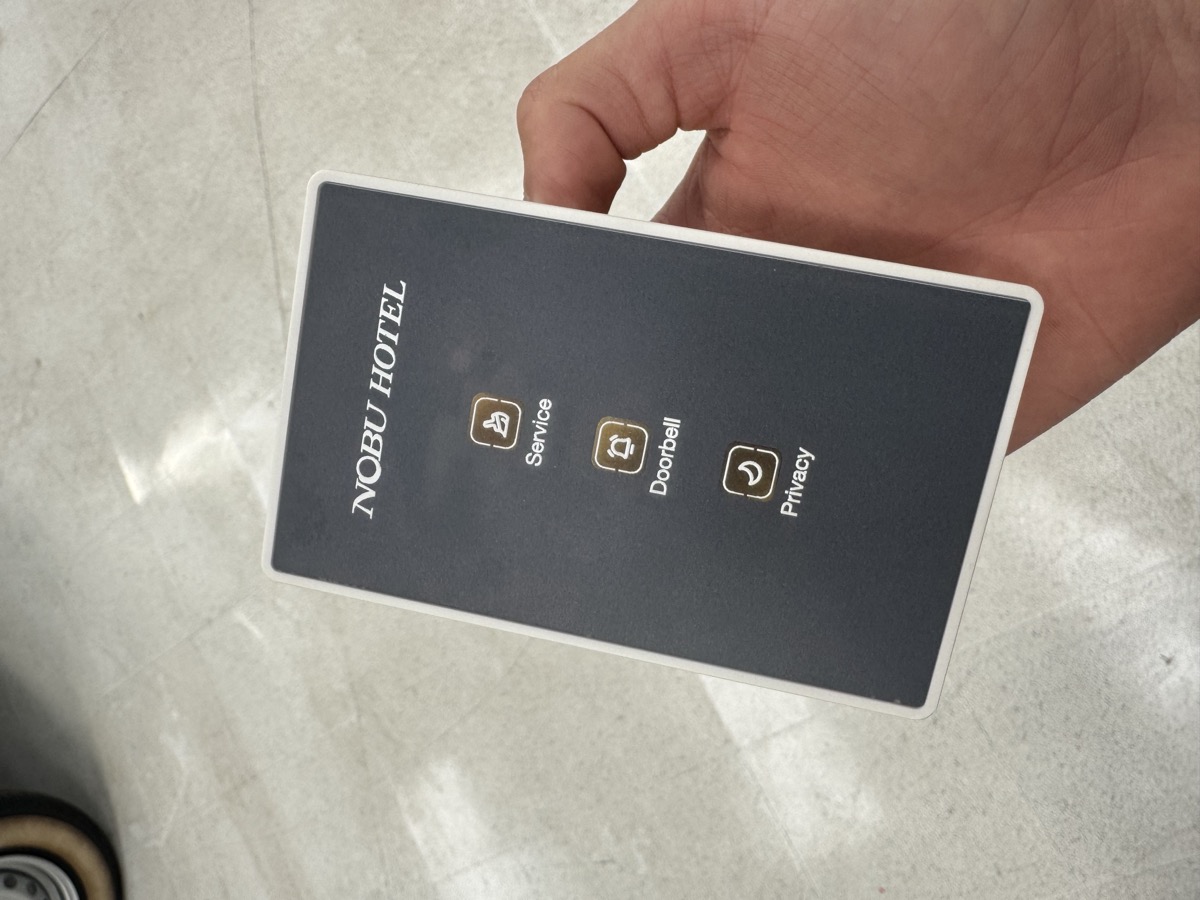
Custom-branded capacitive light plate designed specifically for Nobu Hotels, featuring their aesthetic requirements.
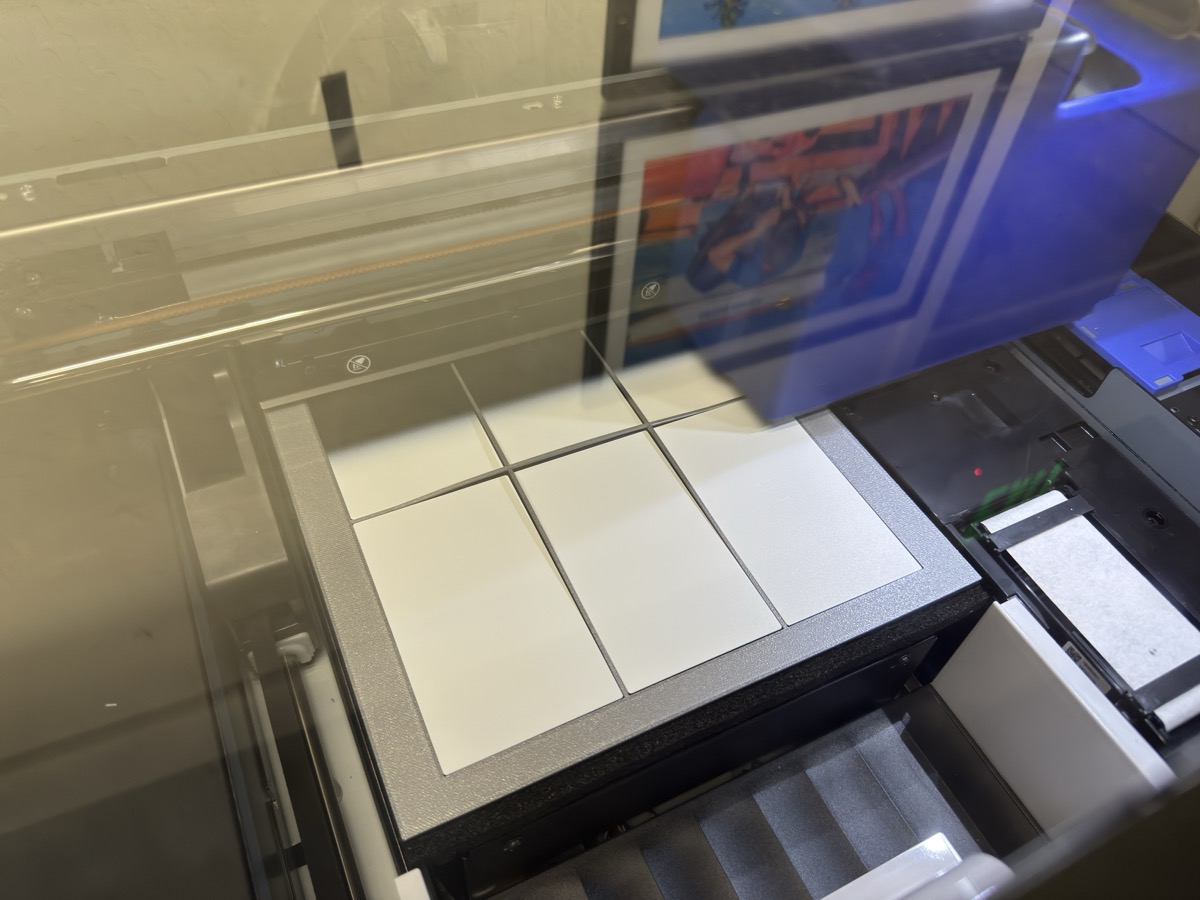
Manufacturing setup for the custom light plates, showing the precision assembly process for capacitive sensors.
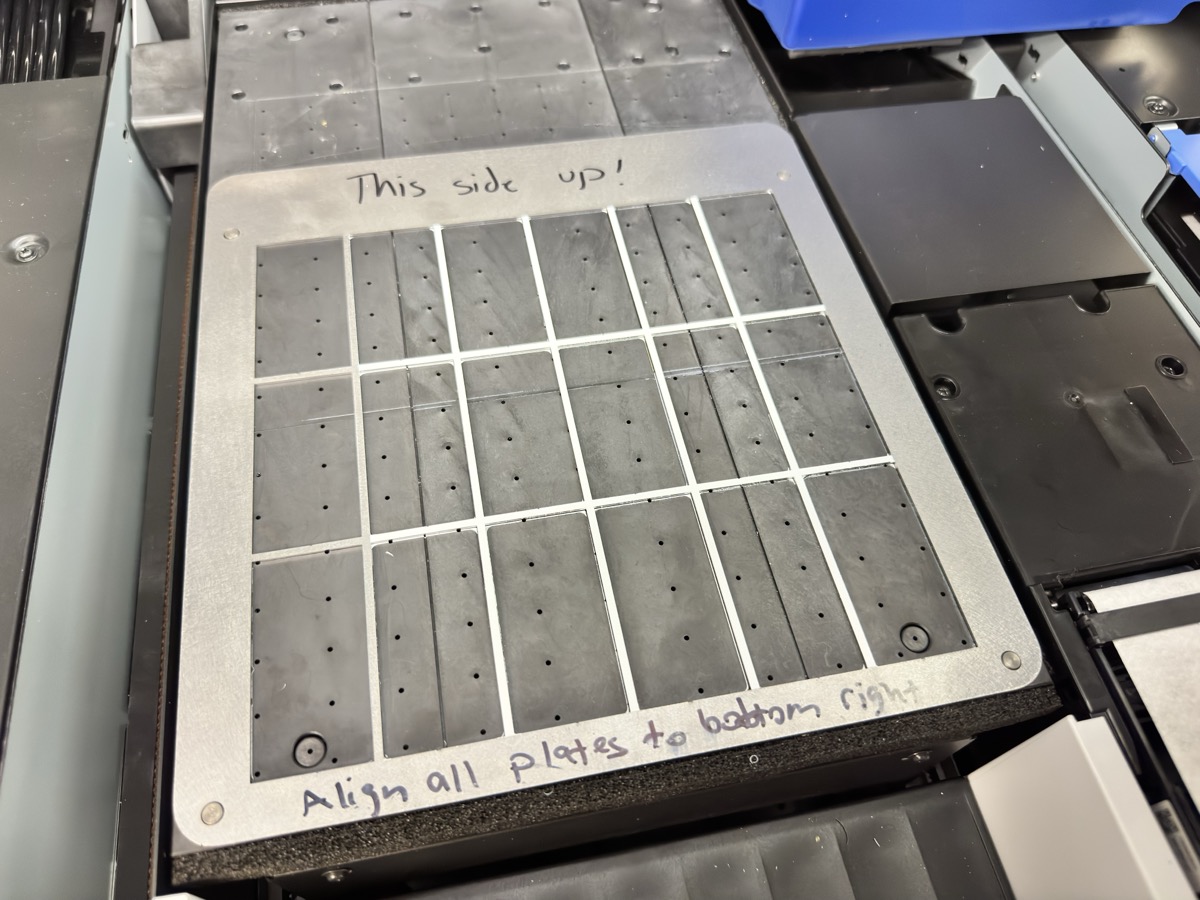
Custom 3D-printed fixture for manufacturing light plates, ensuring consistent quality and alignment during production.
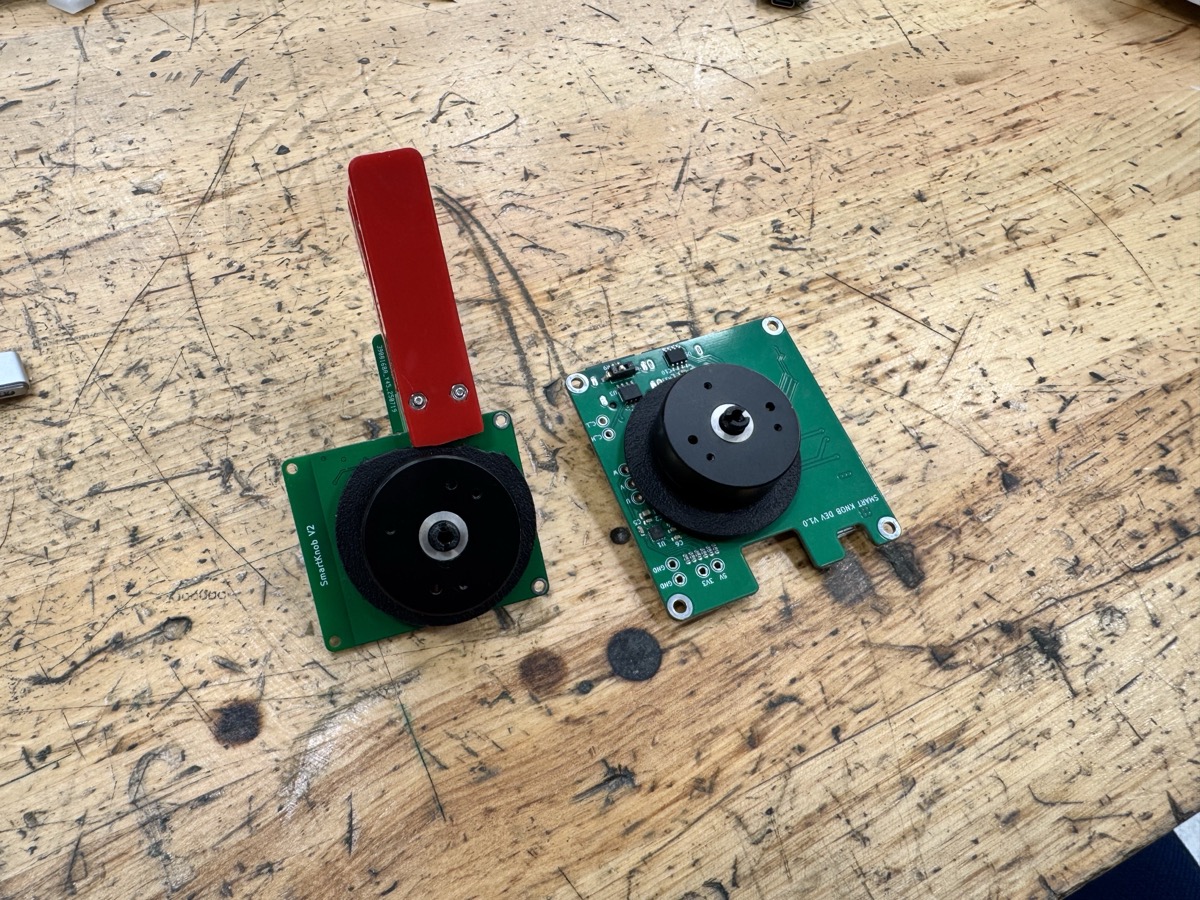
Evolution of the haptic feedback knob from version 1 to version 2, with enhanced tactile response and durability.
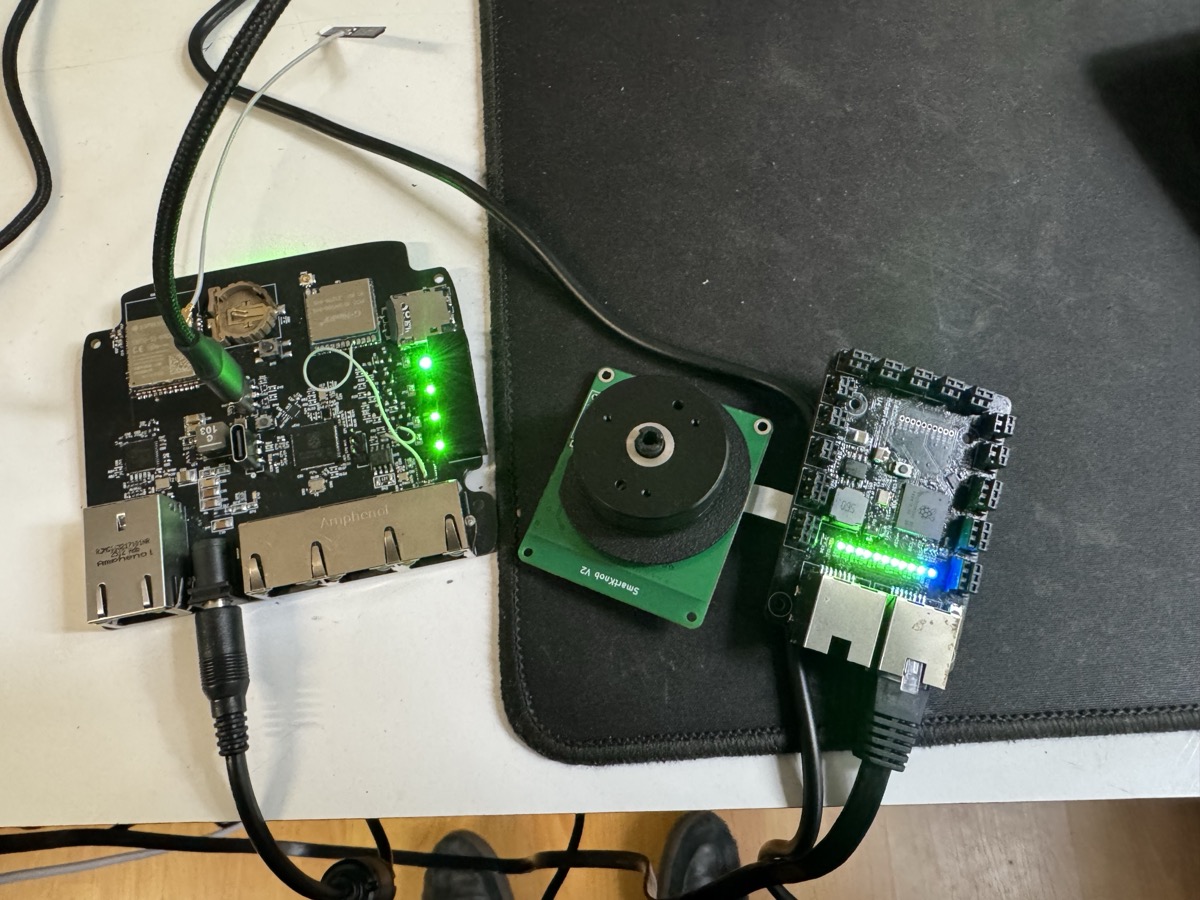
Complete system showing the base station coordinating with a smart haptic knob for intuitive room control.
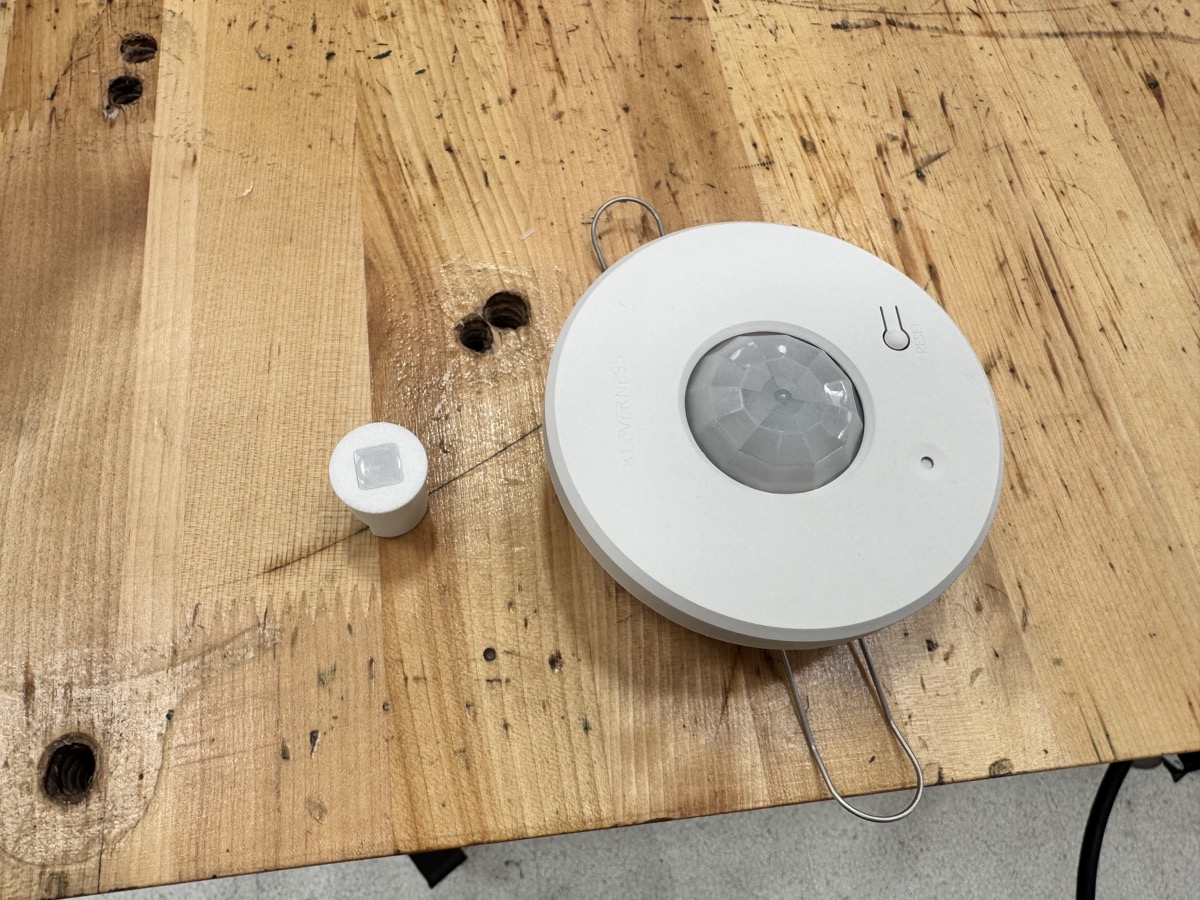
Comparison between older and newer PIR sensor designs, showing improvements in sensitivity and false-positive reduction.
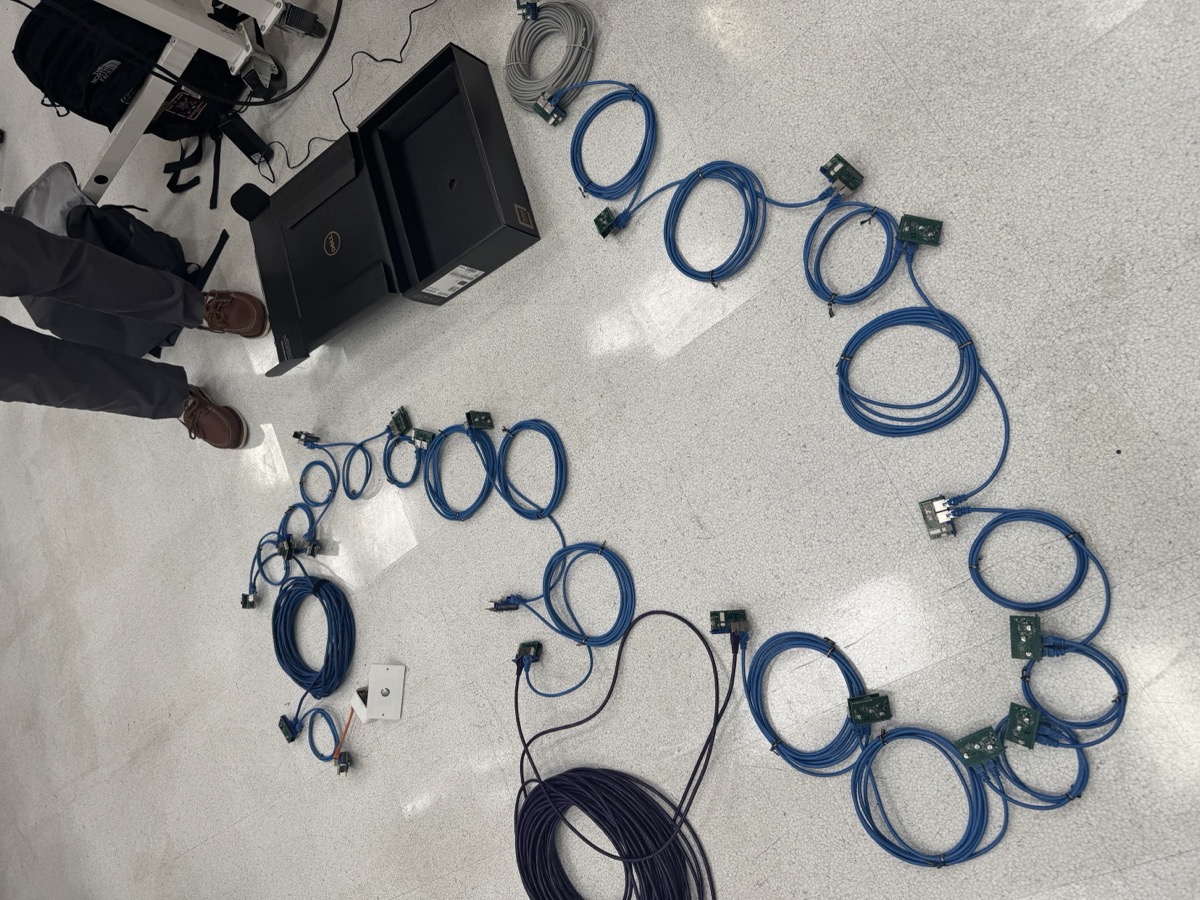
Range testing setup for the CAN bus communication system, validating signal integrity over extended cable lengths.
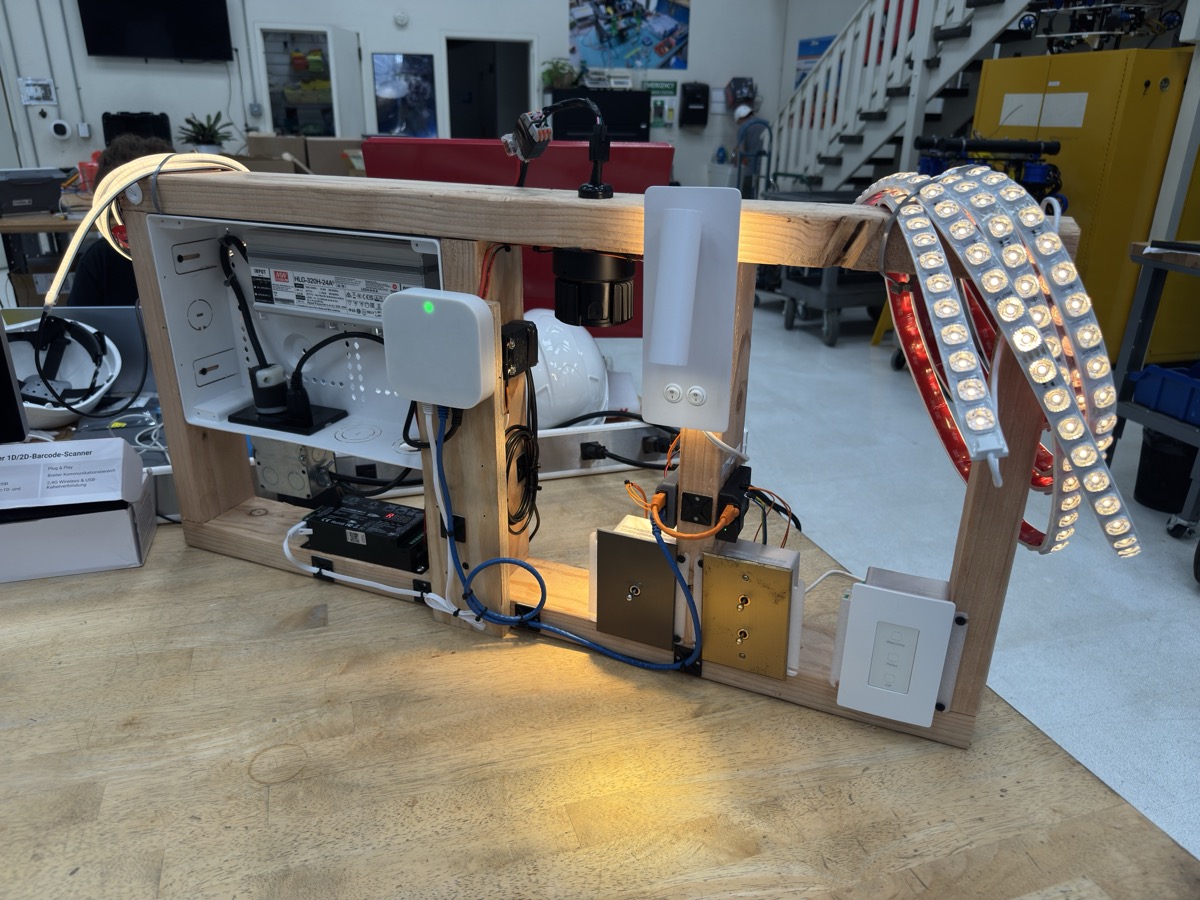
Front view of the investor demo rig that showcases the complete smart room automation system in action.
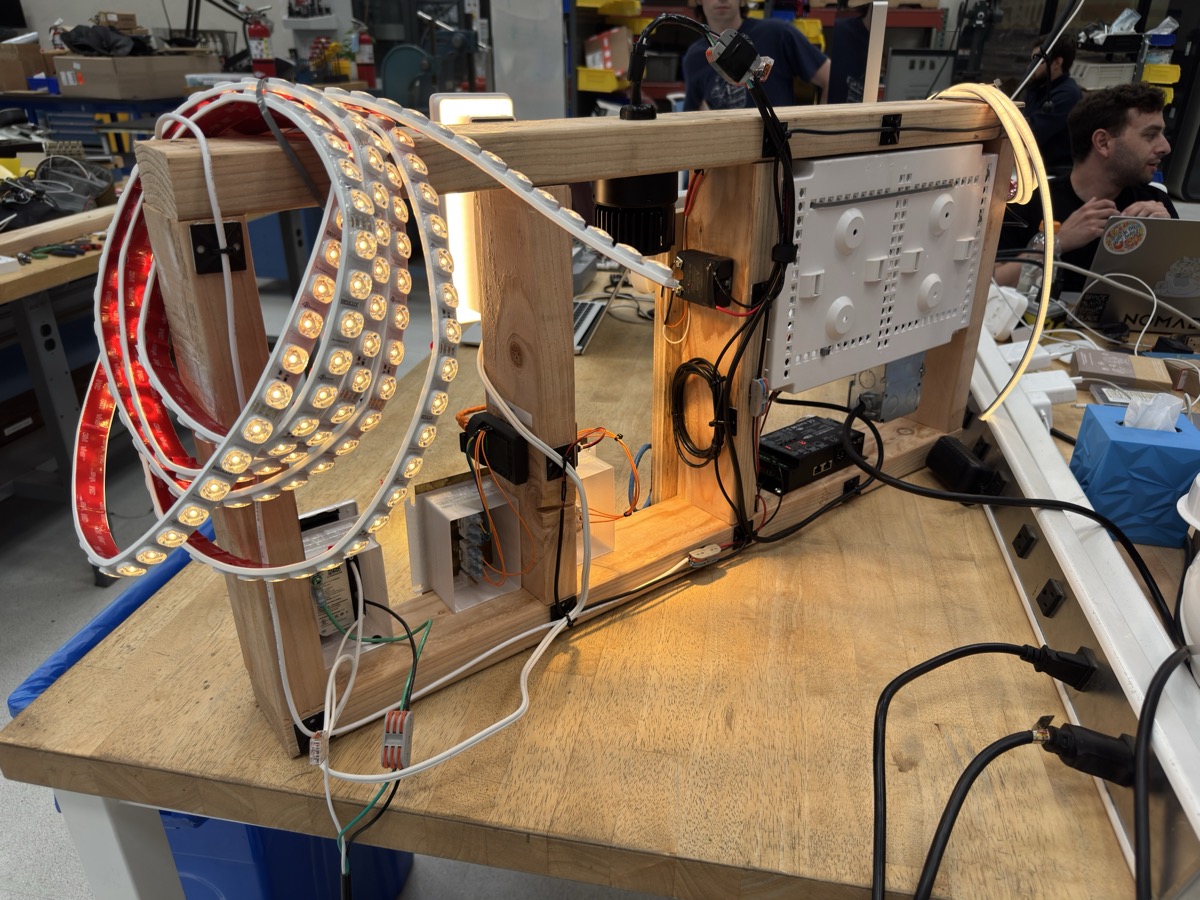
Back view of the demonstration rig showing wiring and connections between base station, switches, and sensors.
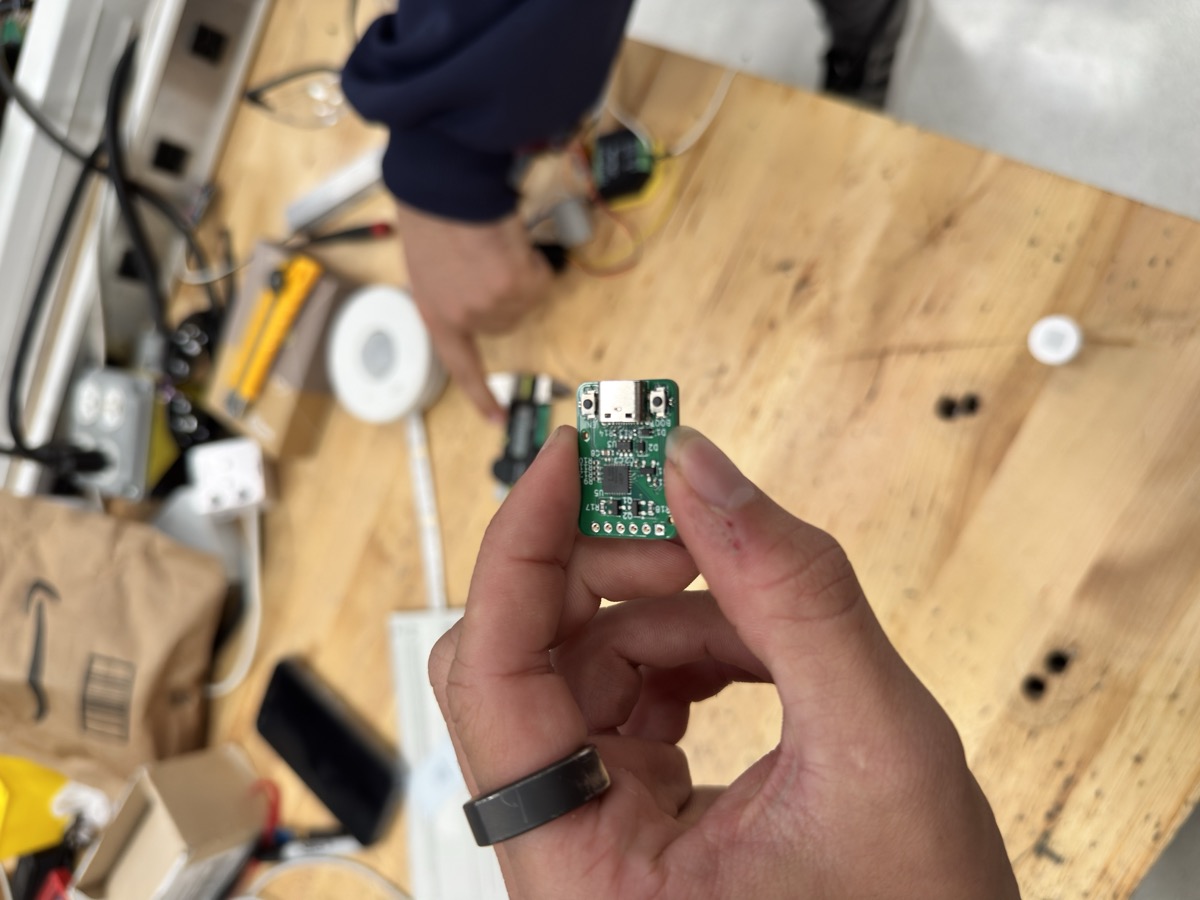
Custom USB-C universal programmer I designed to streamline firmware updates across all Somo device types during manufacturing.